
Which laundry detergent is right for your baby? 5 things to check on the label, and how to choose by age
Baby clothes get everything on them: milk residue, puree, orange juice, sweat. And they’re washed almost every day. That’s why many parents choose a separate detergent for their baby’s clothes. Whether you’re in a shop or browsing online, here are five things to read on the label.
1. A product line for children’s clothes
The pack usually says “mother & baby” or “for children’s clothes”. These lines tend to have a lighter scent and dosing guidance for small loads.
2. Cleaning ingredients for baby stains
Milk, puree and food are organic stains. Many detergents contain enzymes, for example protease, which helps break down protein stains such as milk. Read the ingredients on the label to see what the product uses.
3. Scent
Babies press their faces into pillows and hug soft toys, so a gentle, not overpowering scent is more pleasant. If possible, try a small bottle before buying a large can. See also: Which scent to choose for baby laundry?
4. Dosing and washing instructions
A complete label tells you how much to use by load size, whether it’s for hand or machine washing, and whether you need fabric softener. A 2-in-1 detergent saves a step when baby clothes need washing several times a day.
5. Manufacturer, expiry date and where to buy
The label should show the manufacturer’s name and address, the production date and the expiry date. Buy from official stores or reputable shops to be sure it’s genuine and in date.
Choosing by age
| Age | What you wash most | What to look for |
|---|---|---|
| Newborn (0–6 months) | Burp cloths, cloth nappies, clothes worn next to the body | A very soft scent, wash separately, rinse well, try a small bottle first. See Detergent for newborn clothes |
| 6–12 months (weaning) | Bibs, tops with puree and juice | Ingredients that tackle milk and starch stains such as enzymes; treat stains early. See Removing milk and puree stains |
| 1–3 years (nursery) | Clothes worn at nursery, outdoor play | Washed almost daily; a 2-in-1 detergent saves a step. See Washing nursery clothes |
Should baby clothes be washed separately?
Yes, especially in the first months. Adults’ clothes often carry mud, grease and heavy sweat and usually need a higher dose. Washing separately lets you adjust the dose, choose a gentle scent and rinse more thoroughly. As your baby grows, lightly soiled clothes for the whole family can go in together, as long as you use a detergent everyone can use and rinse well.
Which detergent for newborns?
No single product suits every baby. Use the five points above: a line for children’s clothes, ingredients that clean milk and puree, a gentle scent, clear dosing, full manufacturer details. Try a small bottle first before buying a large can. For newborn clothes you might skip separate fabric softener; see Should you use fabric softener on newborn clothes?
Habits for washing baby clothes
- Wash new clothes before your baby wears them.
- Wash baby clothes separately from adults’ muddy clothes.
- Treat stains early: milk and puree are harder to remove once dry. Rinse in cold water, then pour a little detergent onto the stain before washing.
- Rinse well: on a machine, you can add an extra rinse for baby clothes.
- Dry completely before putting away, especially in humid weather.
- If your baby’s skin shows anything unusual after wearing freshly washed clothes, stop using the product and talk to a doctor.
Abby laundry liquid for baby clothes
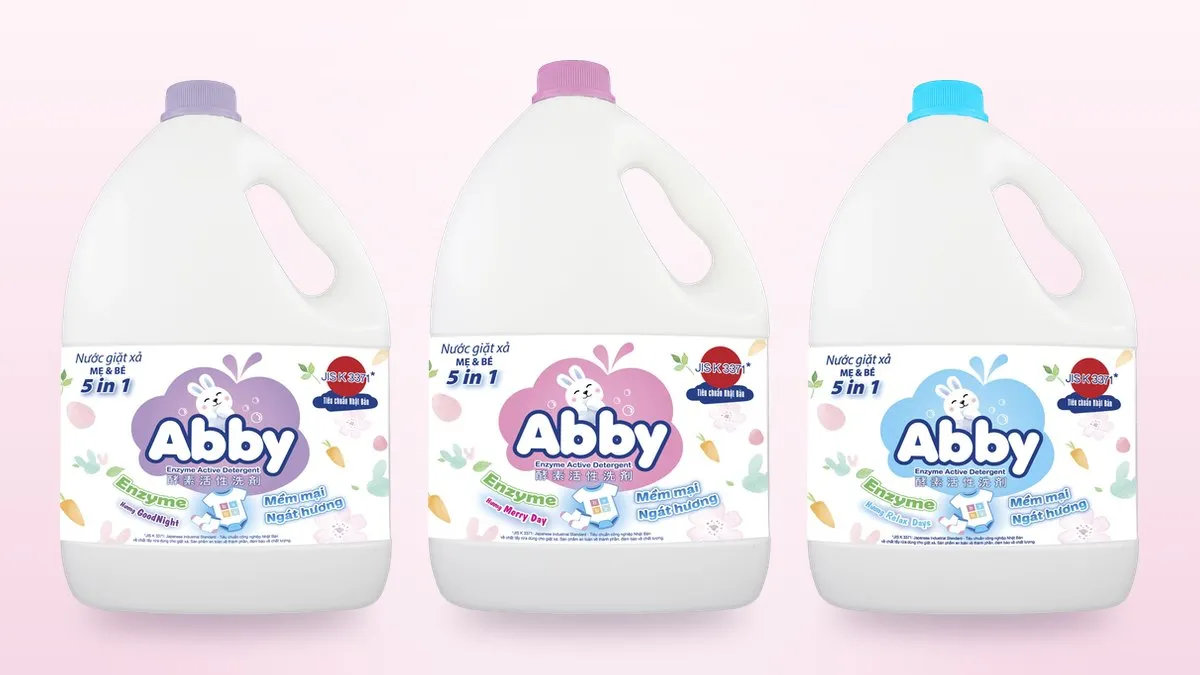
Abby is Komlife Vietnam’s Mother & Baby 5-in-1 laundry liquid, made at the factory in Hung Yen:
- Ingredients: a formula combining plant-derived ingredients and enzymes to help clean clothes.
- 5-in-1: deep clean, odour removal, softness, colour care, lasting scent. Washes and softens in one go.
- Three scents:
- Goodnight: soothing, for pyjamas and bedding.
- Merry Day: bright and sweet.
- Relax Days: light and airy.
- Sizes: 3L can, 1.1L can and a 100ml trial bottle to try a scent first.
How to use: use an amount that suits the load and how dirty it is. Pre-treat stubborn stains. Read the instructions on the pack, keep out of reach of children and close the cap after use.
Reviewed by: Vu Hoang Nam
← More home care guides