
Choosing a dishwashing liquid: how to read the label for your kitchen
Quick answer: choose a dishwashing liquid to match how you cook. If you fry and stir-fry a lot, go for one that clearly says it cuts grease; if you cook a lot of fish and seafood, choose one that removes fishy smells. Pick a scent you like, or an unscented one if you’re sensitive to smells. Choose the size by how much you use: small bottles for small households, large cans for big families or eateries. Always check the instructions, shelf life and manufacturer details on the label.
1. What it cleans
Every kitchen is different, so read the claims line carefully:
- Cuts grease: for homes that fry, stir-fry and grill, and for pans and pots.
- Removes dried starch: rice pots, porridge bowls, plates left standing.
- Removes fishy smells: dishes used for fish, prawns, seafood, chopping boards.
- Suitable materials: ceramic, glass, stainless steel, aluminium, plastic… For non-stick or wooden items, also check the cookware maker’s advice.
2. Scent
The scent stays on your hands and in the kitchen, so choose one you enjoy:
| Scent | Feel | Suits |
|---|---|---|
| Cinnamon | Warm, pleasant | People who like herbal scents |
| Ginger-lemongrass, lemon-lemongrass | Fresh | Kitchens with lots of seafood and grease |
| Mint | Cool | People who like a clean, cool feel |
| Unscented | Almost no scent | People sensitive to smells, homes that prefer little fragrance |
3. Pack size: bottle, can or pouch?
- 380ml–1 litre bottles: small households, trying a new scent.
- 2–3.6 litre cans: larger households cooking every day; better value than buying small bottles repeatedly.
- If you buy a large can, decant into a small pump bottle for daily use and keep the can tightly closed.
4. How to use and shelf life
- Check the dosing: many concentrated formulas need only a few drops per wash, or should be diluted with water.
- Shelf life is printed on the bottle or cap. Very old dishwashing liquid may change colour or smell.
- Store somewhere dry, out of direct sun and out of children’s reach.
5. Manufacturer details
Genuine products clearly show the company name, factory address, batch number and production date, plus a hotline. How to check: Quality & Standards
Tips for clean dishes with less product
- Scrape off leftovers before washing.
- Soak greasy pots and pans in warm water for a few minutes.
- Put the dishwashing liquid on the sponge, squeeze to foam, rather than pouring it on each bowl.
- Wash lightly soiled items first (glasses, bowls), greasy ones last.
- Rinse with clean water and leave to drain somewhere airy.
- Wear gloves for long or large washing-up sessions.
Dishwashers need a dedicated dishwasher detergent, not hand dishwashing liquid. See: Can you use dishwashing liquid in a dishwasher?
Komlife dishwashing liquids
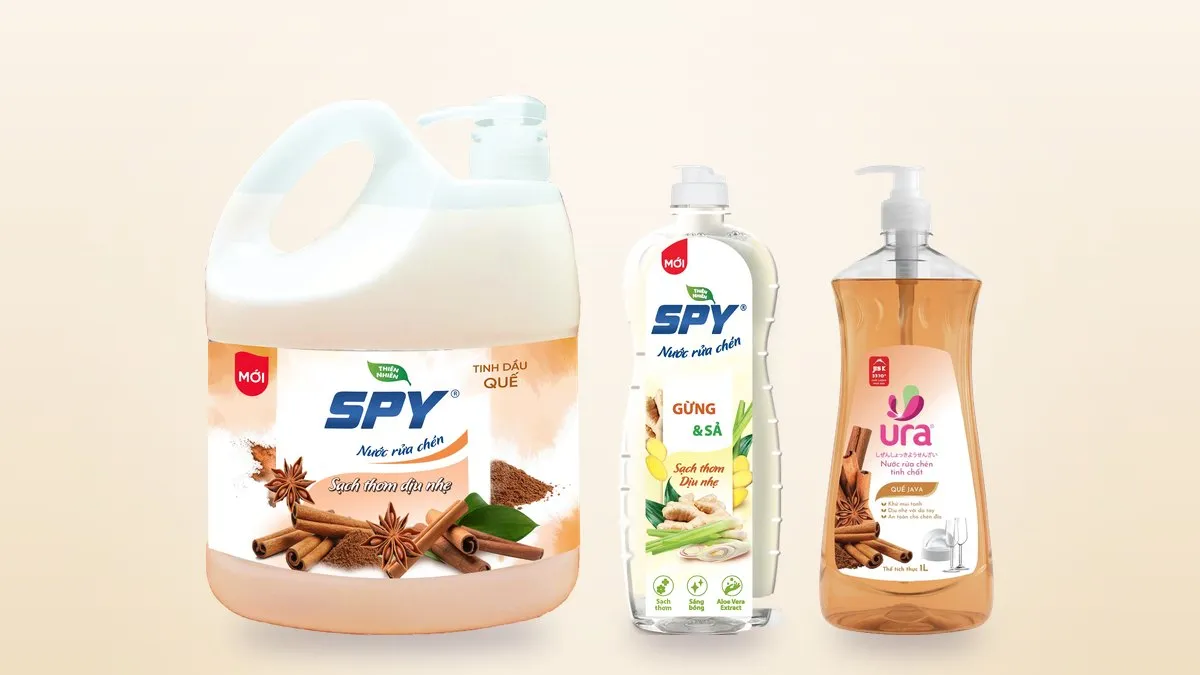
- SPY Dishwashing Liquid: cleans grease, dried starch and fishy smells, with aloe vera extract. Five scents, Cinnamon, Ginger & Lemongrass, Mint, Himalayan Pink Salt and Unscented, from 380ml bottles to 3.6-litre cans.
- URA Dishwashing Liquid: quickly cuts grease and removes fishy smells, with a formula gentle on hands; two scents, Java Cinnamon and Lemon & Lemongrass.
Read next: Cinnamon dishwashing liquid: how to use it for clean dishes and a fresh kitchen
Reviewed by: Vu Hoang Nam
← More home care guides