
Home care guides · 24 June 2025 · Updated
What's different about cinnamon dishwashing liquid? Choosing a scent for your kitchen
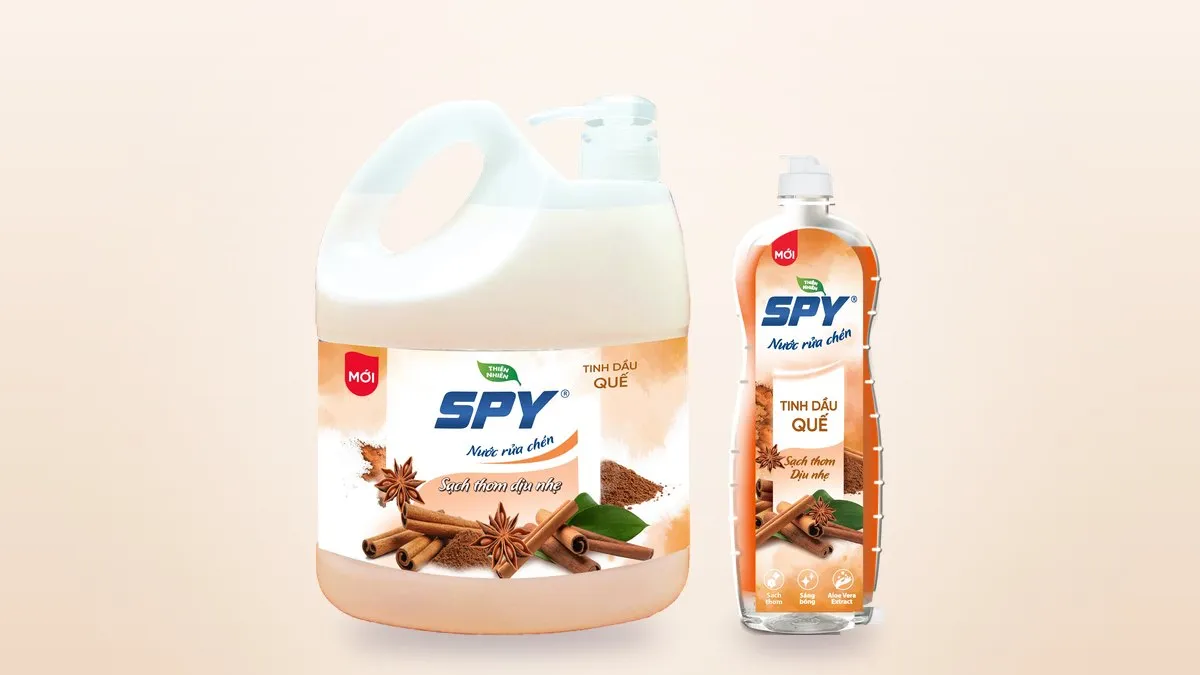
Quick answer: cinnamon oil dishwashing liquid has a warm scent that helps mask fishy smells from raw fish and meat on dishes and utensils. Grease removal comes mainly from the cleaning agents in the formula; choose the scent by taste and the dishes you cook most.
Choose a scent for your kitchen
| Scent | Suits |
|---|---|
| Cinnamon | Kitchens that cook a lot of fish, seafood and meat; warm-scent lovers |
| Ginger & Lemongrass | Greasy cooking; fresh, clean-scent lovers |
| Peppermint | A cool, light scent |
| Himalayan pink salt | A gentle scent |
| Unscented | No fragrance left on dishes and drinking glasses |
Washing fishy items (fish, seafood, raw meat)
- Rinse in cold water first; hot water can make fishy smells cling.
- Add dishwashing liquid to the sponge, squeeze to lather and wash.
- Chopping boards and knives: wash both sides and the handle.
- Rinse thoroughly with clean water and leave to dry upside down.
Washing greasy items
- Scrape leftover food and fat into paper or the bin, not down the sink.
- Soak pans and pots in warm water for a few minutes.
- Wash with a sponge and dishwashing liquid, then rinse with clean water.
How much is enough?
Just enough on the sponge to lather. Too much doesn’t clean better and takes more water to rinse. For a big pile, you can dilute a little in a basin of water.
SPY Dishwashing Liquid
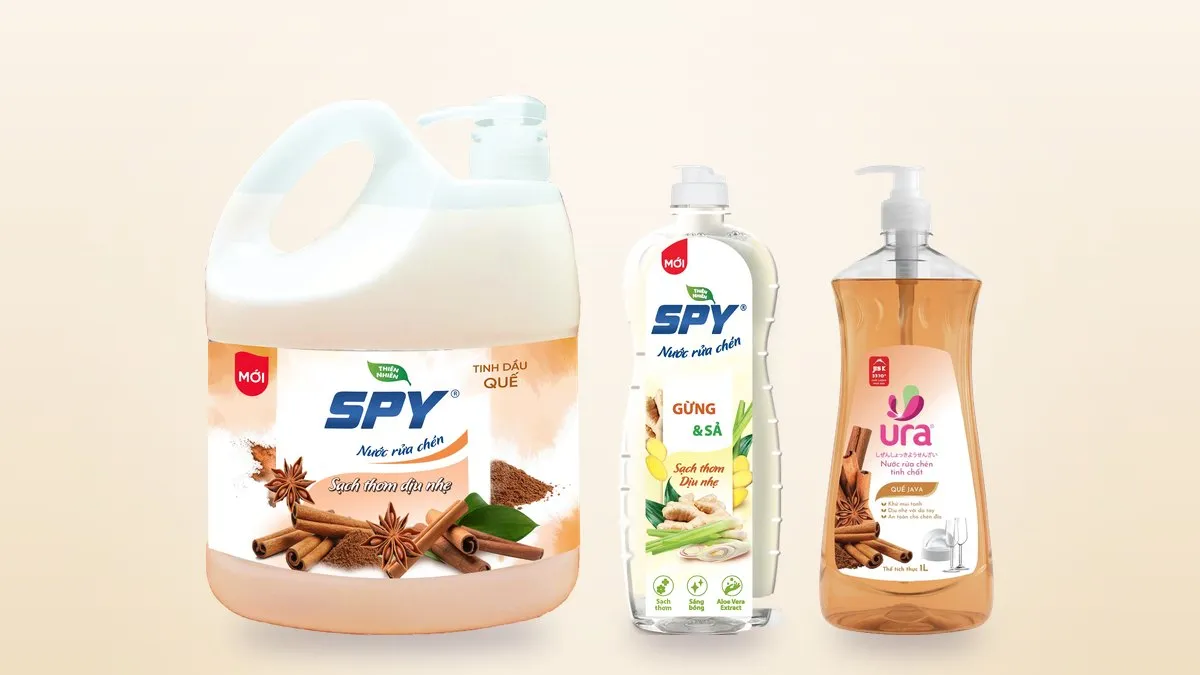
SPY Dishwashing Liquid removes grease, dried starch and fishy smells from dishes, and is suitable for ceramics, glass, stainless steel, aluminium, iron and plastic:
- Scents: Cinnamon (cinnamon oil), Ginger & Lemongrass, Unscented; the 1L bottle also comes in Peppermint and Himalayan pink salt.
- Sizes: 380ml, 760ml and 1L bottles; 2L and 3.6L cans.
- How to use: put enough on a sponge, squeeze to lather, wash, then rinse with clean water.
Reviewed by: Vu Hoang Nam
← More home care guides