
Home care guides · 25 February 2025 · Updated
How to clean wooden floors properly: what to use and how much to dilute
Quick answer: clean wooden floors with a well-wrung cloth or mop, using a diluted floor cleaner labelled for wood, mop along the grain and let the floor dry quickly. Avoid standing water and harsh cleaners, and don’t use a steam mop unless your floor maker allows it.
What wooden floors don’t like
- Standing water: it seeps between boards, causing swelling and cupped edges.
- Harsh cleaners: they dull the finish.
- Grit and sand: stepping on it scratches the finish.
- Dragging furniture across the floor.
Daily cleaning
- Sweep or vacuum first to remove grit.
- Dilute floor cleaner as directed. For example, SPY Floor Cleaner uses 1–2 capfuls per bucket of water. For wood, use the lower amount.
- Wring the mop well so it’s only slightly damp.
- Mop along the grain, one small area at a time.
- Open a window or turn on a fan so the floor dries fast. If you see water marks, wipe with a dry cloth.
Which mop to use?
| Type | Suits wooden floors? |
|---|---|
| Microfibre mop, well wrung | Yes, uses little water and leaves few fibres |
| Absorbent cotton mop | Only if wrung out very well |
| Steam mop | Only if your floor maker allows it |
| Robot mop | Use a low-water setting; see Can you use floor cleaner in a robot mop? |
Habits that wear wooden floors out faster
- Pouring floor cleaner straight onto the floor before mopping.
- Using cleaner that’s too concentrated, so the floor feels sticky and attracts dust.
- Leaving spills and water marks for a long time.
- Dragging tables and chairs without felt pads.
SPY Floor Cleaner for wooden floors
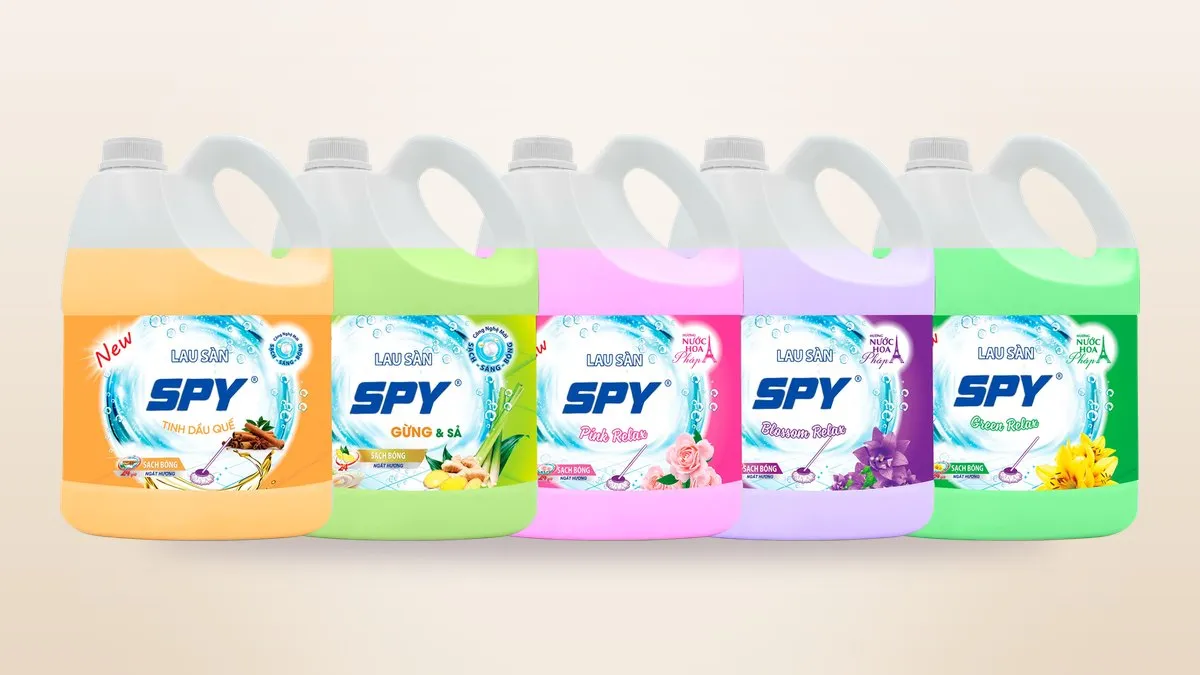
SPY Floor Cleaner is a low-foam formula that cleans quickly with no need to rinse, for tiles, wooden floors and granite. Five scents: Blossom Relax, Pink Relax, Green Relax, Cinnamon, Ginger & Lemongrass. Sizes: 3.6L can and 950ml bottle.
Read more: Why floors feel sticky after mopping, and how to dilute correctly
Reviewed by: Vu Hoang Nam
← More home care guides