
Home care guides · 4 November 2026
Washing clothes in warm or cold water? What temperature to use
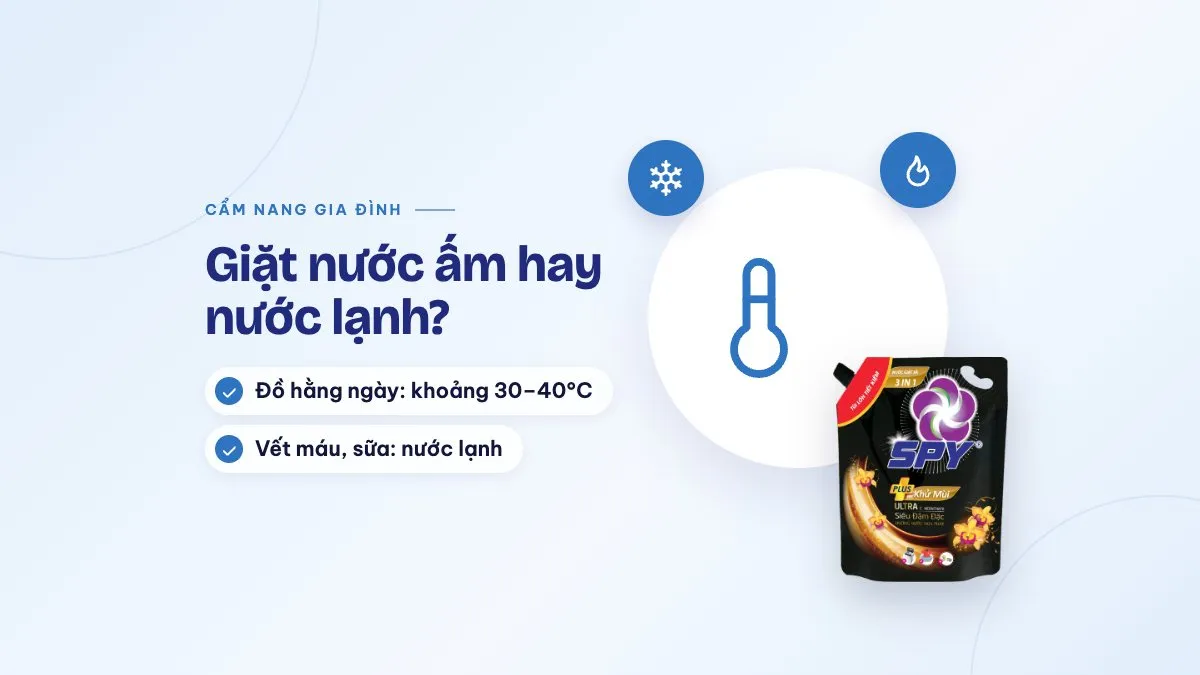
Quick answer: most everyday clothes come clean in tap water or warm water at about 30–40°C. Warm water helps detergent dissolve evenly in cold months and deals with sweat and grease more easily. Cold water suits dark colours, wool and delicates, and stains such as blood, milk and egg (hot water sets protein stains). Always check the care label first.
When to wash in warm water (30–40°C)
- In winter, when tap water is too cold for detergent to dissolve evenly, especially for hand washing.
- Towels, bedding, underwear and sportswear with a lot of sweat.
- Grease, lipstick and foundation stains after pre-treating.
- Whites and colourfast cotton.
When to wash in cold or tap water
- Dark colours and new clothes that may bleed. See: How to wash new clothes so the colour doesn’t run
- Jumpers, silk, chiffon and printed clothes.
- Blood, milk and egg stains: rinse in cold water first. See: How to remove blood stains from clothes
- Anything labelled cold wash.
Reading the temperature symbols on care labels
| Symbol on the label | Meaning |
|---|---|
| Wash tub with 1 dot or 30 | Wash at up to 30°C |
| 2 dots or 40 | Up to 40°C |
| 3 dots or 50 | Up to 50°C |
| 4 dots or 60 | Up to 60°C, common on white cotton towels and sheets |
| Wash tub with a hand | Hand wash only |
| Wash tub crossed out | Do not wash in water |
A line under the tub means use a gentle cycle.
Choosing the machine setting
- Front loaders usually let you set the temperature: everyday clothes 30–40°C; white cotton towels and sheets 40–60°C if the label allows; wool and delicates cold or 30°C on a gentle cycle.
- Top loaders mostly don’t heat water. In cold weather you can run warm water (no hotter than 40°C) into the drum first, dissolve the detergent, then add clothes, if your machine’s manual allows it.
- Higher temperatures use more electricity. Everyday clothes don’t need more than 40°C.
What to avoid
- Don’t wash clothes in boiling water: fabric shrinks, colours fade and elastic breaks.
- Don’t pour boiling water into a washing machine: it can damage plastic parts and seals.
- Don’t tumble dry or iron before a stain is fully gone.
Does liquid detergent work in warm water?
Liquid detergent dissolves well in both cold and warm water. Detergents with enzymes usually work well in moderately warm water and don’t need hot water. See: What are enzymes in laundry detergent?
- SPY Ultra Clean Plus: concentrated 2-in-1 detergent, 50–70ml for 5–7kg of laundry, for hand and machine washing.
- For baby clothes: Abby, the Mother & Baby enzyme detergent and softener that cleans milk residue, starch and sweat from towels and clothes.
Read next: How to wash jumpers without pilling
Read more: Clothes shrank in the dryer
Reviewed by: Vu Hoang Nam, Head of Marketing
← More home care guides