
Dishwashing liquid for restaurants and canteens: what to choose and how to use less
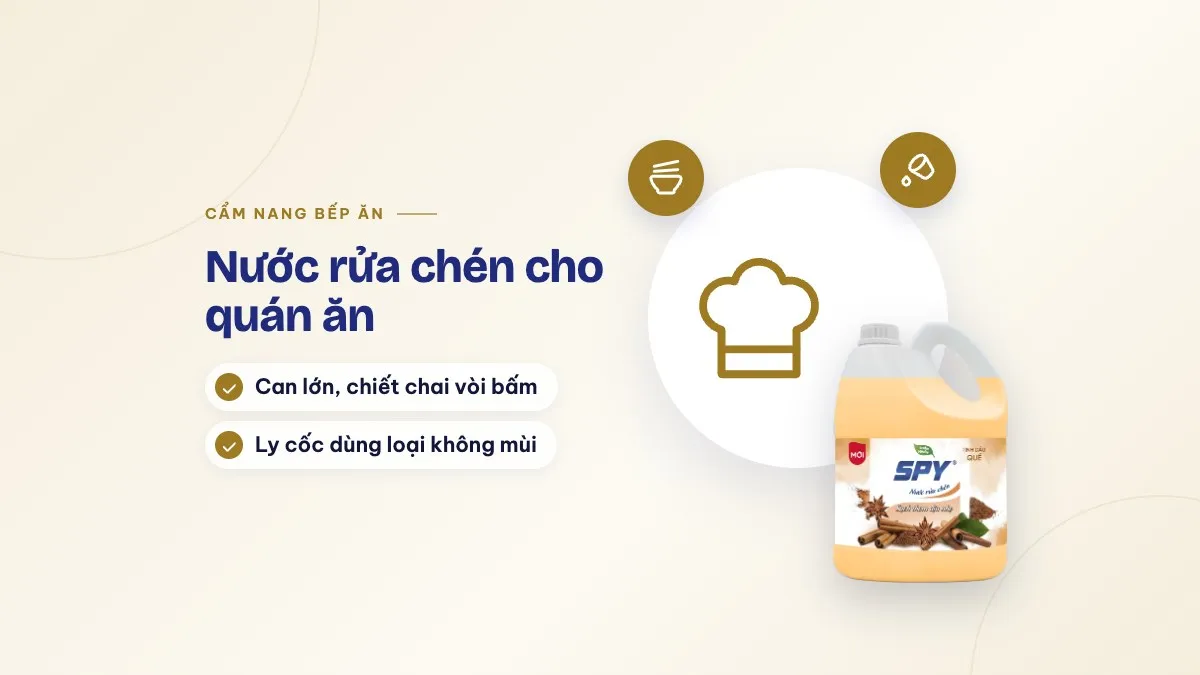
Quick answer: restaurants and canteens should buy large cans or pouches, decant into pump bottles next to the sink, use an unscented liquid for glassware and cinnamon or ginger-lemongrass for plates and fishy items. Wash in a wash – rinse – final rinse line, put the liquid on the sponge or dilute it as the label says instead of pouring it straight on, and record how many cans you use each week so you order just enough.
Large cans or small bottles?
| Pack size | Suits |
|---|---|
| 380 ml – 1 litre bottles | Drink counters, small eateries, next to the sink |
| 2-litre can | Mid-size eateries, small canteens |
| 3.6-litre can, 3-litre pouch | Busy restaurants, company and school canteens |
Large cans and pouches mean fewer reorders and fewer empty bottles. The tidiest way to use them is to decant into pump bottles, so staff take the right amount instead of pouring from the can.
Choose a scent for each area
- Glasses and the drinks counter: use an unscented liquid so no scent ends up in tea or coffee.
- Plates, pots and pans: cinnamon or ginger & lemongrass help mask grease and fishy smells.
- Seafood and fish restaurants: prefer cinnamon, and wash fishy items separately and last.
Set up a wash – rinse – final rinse line
- Scrape leftovers into a separate bin, not down the drain, to avoid blockages.
- Sink 1 – wash: warm water with dishwashing liquid, wash with a sponge.
- Sink 2 – rinse: clean water to remove all suds.
- Sink 3 – final rinse: clean water, changed often.
- Stand dishes on an airy rack and let them drain before stacking.
Keep a separate area for glasses and another for raw or fishy items so glasses don’t pick up smells. See also Dishes still smell fishy after washing.
How to use less
- Don’t pour straight from the can onto dishes: put it on the sponge or dilute it in the sink as the label directs.
- Pre-soak greasy items (pans, trays, braising pots) in warm water for a few minutes; they wash faster and need less liquid.
- Change the wash water when it turns cloudy or greasy instead of adding more liquid.
- Make one person per shift responsible for filling the sink, so usage stays consistent.
Working out monthly usage
Every kitchen uses a different amount depending on covers, menu and washing habits. The simplest method:
- Write the date on each new can when you open it.
- Write the date it runs out.
- After 2–3 cans, take the average to know how many cans you need per week and per month, and order before you run out.
Komlife dishwashing liquids
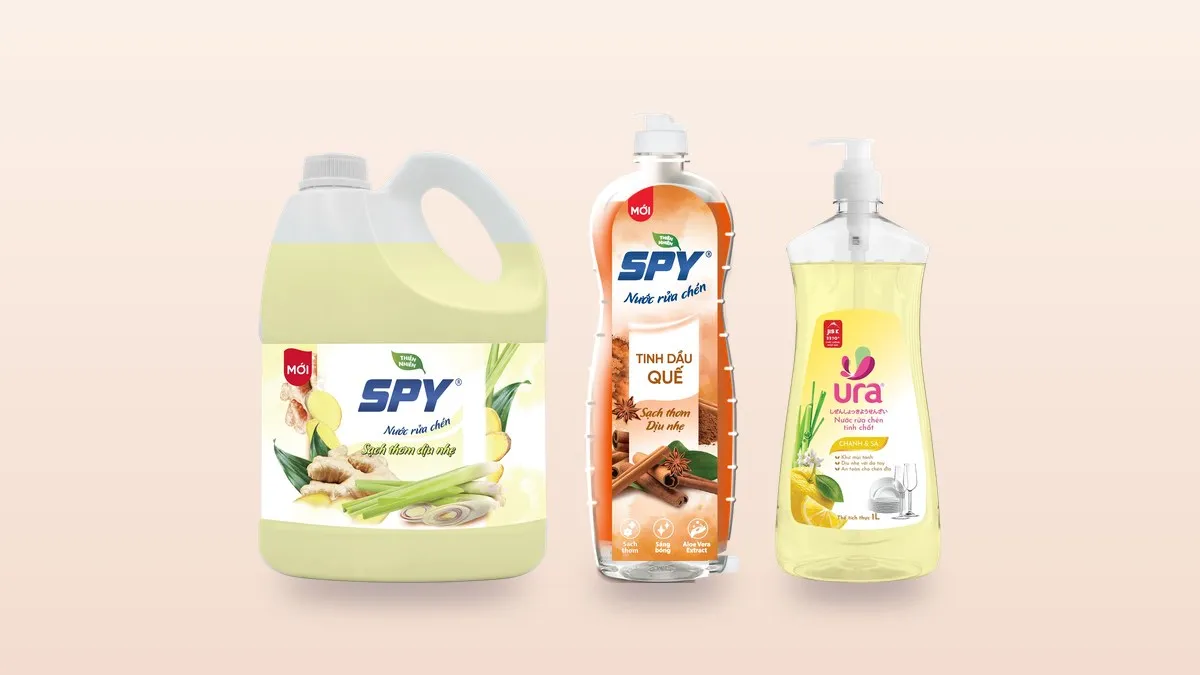
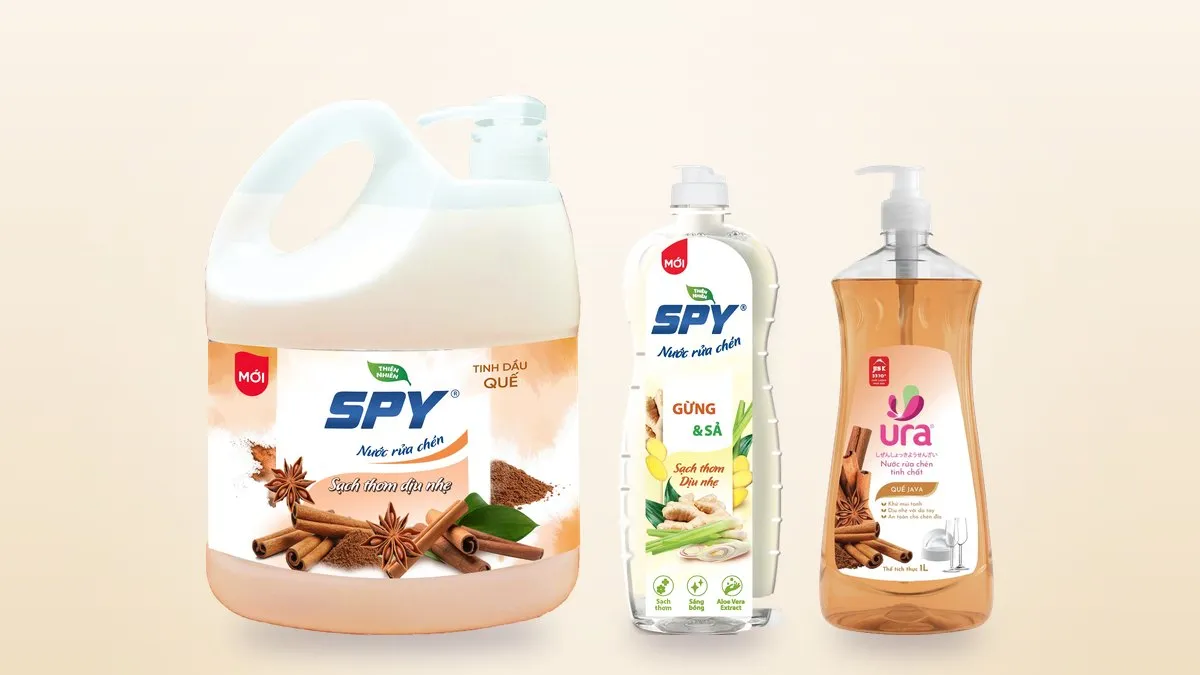
- SPY Dishwashing Liquid: 2-litre and 3.6-litre cans in Cinnamon, Ginger & Lemongrass and Unscented; 380 ml, 760 ml and 1-litre bottles. For porcelain, glass, stainless steel, aluminium and plastic.
- URA Dishwashing Liquid: 3-litre pouch with a pour spout for refilling bottles, and a 1-litre pump bottle; Java Cinnamon and Lemon & Lemongrass.
Restaurants and canteens that need regular supply can contact their nearest dealer via our hotline 0989 702 010, or see our dealer and distributor partnership page.
Read more: Washing up after a big Tet feast · Slow or blocked kitchen sink: how to clear it at home
Reviewed by: Vu Hoang Nam, Head of Marketing
← More home care guides