
Washing up after Tết feasts and parties: faster, grease-free and with less dishwashing liquid
Quick answer: scrape off food, wipe grease with paper, sort the dishes, soak greasy pans in warm water, then wash in order: least dirty first, greasiest last. Dilute dishwashing liquid in a small basin instead of squeezing it onto each dish to use less.
1. Scrape and wipe before washing
- Scrape leftovers into a rubbish bag as you clear the table; don’t let food dry hard on the plates.
- Wipe greasy plates and pans with paper first. Less grease on the dishes means less dishwashing liquid and less grease going down the drain.
- Never pour leftover cooking oil down the sink: oil that cools in the pipe is the main cause of blocked sinks. See slow or blocked kitchen sink.
2. Sort
Group everything next to the sink:
- Cups, glasses, glassware: least dirty, washed first while the water is clean.
- Bowls and plates.
- Plates used for fried, stir-fried or fatty meat.
- Pots, pans, baking trays: last.
Keep fishy items (fish plates, knives and chopping boards used for prep) separate and wash them last so the smell doesn’t spread.
3. Soak in warm water
Soak greasy pots, pans and plates in warm water with a little dishwashing liquid for 10–15 minutes while you wash the other groups. The grease softens and wipes off easily. For burnt pans, see cleaning burnt pots and pans.
4. Dilute dishwashing liquid in a basin
Instead of squeezing dishwashing liquid onto every bowl, mix just enough into a basin of water, dip the sponge in the basin and wash one item after another. It is more even, makes less excess foam, rinses faster and uses less when you have a lot to wash.
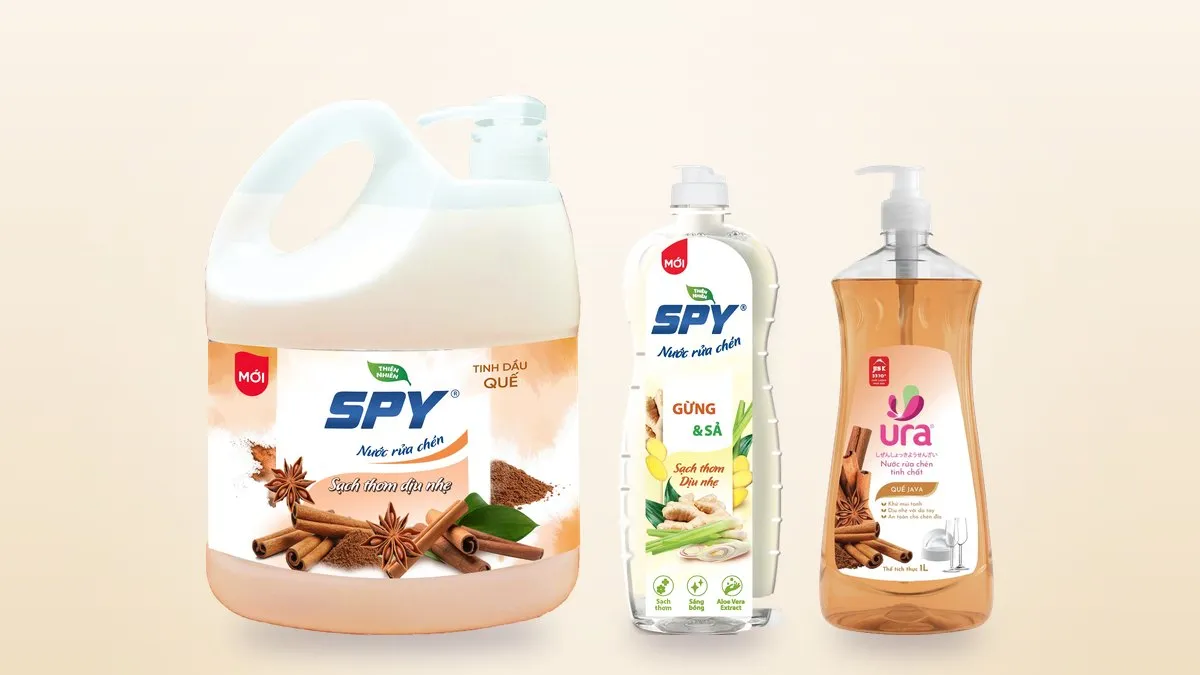
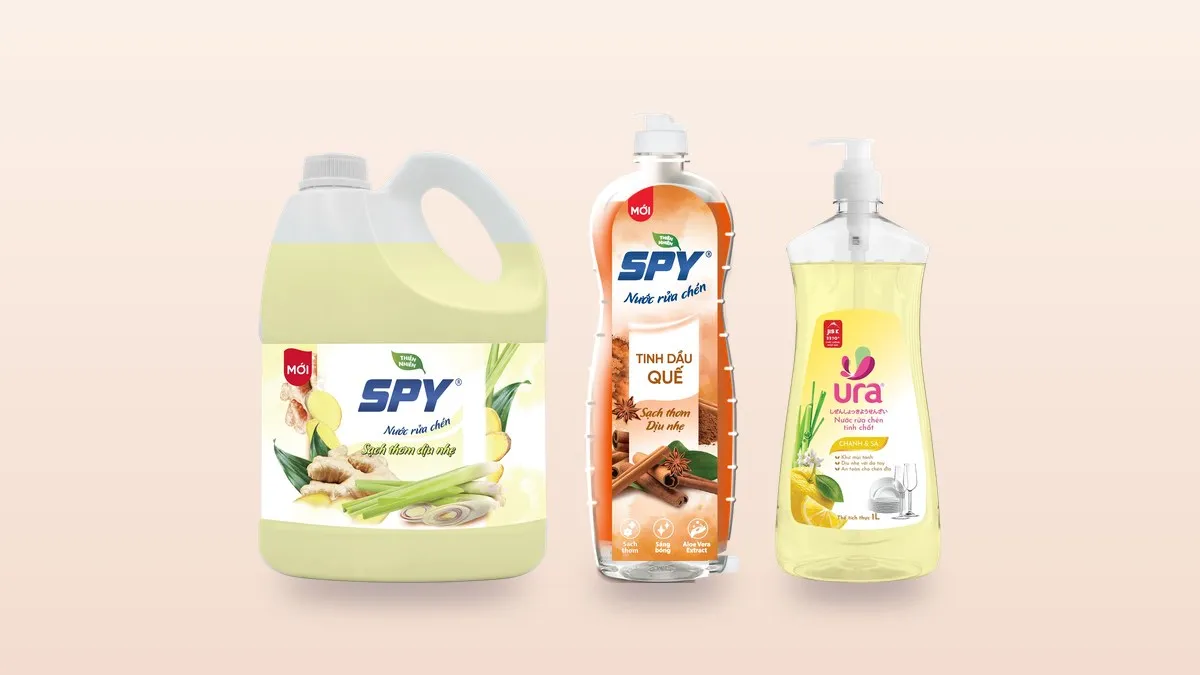
- SPY Dishwashing Liquid cleans grease, dried-on starch and fishy smells from dishes; the Cinnamon scent contains cinnamon oil and suits knives, chopping boards and fish plates. It can be used on porcelain, glass, stainless steel, aluminium, iron and plastic.
- URA Dishwashing Liquid comes in Lime & Lemongrass and Java Cinnamon, and can be diluted with water; the 3L pouch has a spout for refilling the bottle, handy on days with a lot of washing up.
Dishwashing liquid is for washing by hand; a dishwasher needs dedicated tablets, powder or gel. See can dishwashing liquid go in a dishwasher?
5. Rinse and drain
- Rinse in clean water until nothing feels slippery.
- Stand dishes on a rack to drain naturally; tea towels used all through Tết get smelly, so change and wash them daily.
- For sparkling glasses, wipe them with a clean dry cloth while still slightly damp.
Keep your hands from drying out
Washing lots of dishes in cold winter water can dry and crack your hands. Wear rubber gloves, use warm water, and apply hand cream afterwards.
Read more: Choosing dishwashing liquid: how to read the label · Smelly chopping board: how to clean it · Dishwashing liquid for restaurants and canteens
Reviewed by: Vu Hoang Nam, Head of Marketing
← More home care guides