
What should a laundry detergent contract manufacturing agreement include? 10 clauses to have before signing
You have chosen a factory, you like the sample, and now it is time to sign. This is where many new brands sign quickly to launch on time, then discover later that the second batch smells slightly different or that the formula does not belong to them when they want to switch factories. A solid detergent contract manufacturing agreement should answer ten questions: what is made, to what quality, who owns the formula, when it is delivered, how it is checked, how it is paid, and how defects are handled. This article lists each clause so you can check before signing.
This is practical guidance only, not legal advice. For large contracts, have a lawyer review the final version.
How is contract manufacturing different from a purchase agreement?
In a purchase you buy a product the seller already makes. In contract manufacturing you have a factory make a product to your specification, under your brand. Vietnam’s Civil Code 2015 (from Article 542) and Commercial Law 2005 (the section on processing in commerce, from Article 178) both have specific rules for this type of contract. Because the product is made to order, the contract must describe that order precisely; otherwise, in a dispute it is hard to prove the goods differ from what was agreed.
10 clauses to include
- Product and specification: product name, volume or weight, pack type (bottle, jug, spouted pouch), fragrance, colour, units per carton.
- Formula and quality criteria: the factory’s existing formula or a custom one; the parameters tested such as pH, viscosity, density and surfactant content; plus a reference sample signed off by both sides.
- Formula ownership and confidentiality: who owns a custom formula and whether it can move to another factory; the factory must not disclose your brand, customers or volumes.
- Raw materials and packaging: who supplies them; if you supply bottles or labels, the allowed wastage and who bears damage.
- Quantity, schedule and delivery dates: batch sizes, sampling time, production time, delivery dates, and what happens if they slip.
- Product documents and labelling: who holds the product documentation, what the label must state, and who is responsible for printing errors. See also what a private-label detergent label must state and paperwork for making detergent.
- Inspection and acceptance: tested at the factory or on receipt, a test report per batch, how long retained samples are kept, how they are used if there is a complaint.
- Price and payment: unit price per specification, deposit, payment terms, how prices adjust when raw materials or packaging costs change.
- Delivery and transport: delivered at the factory or your warehouse, who pays, who bears the risk of breakage or leaks in transit.
- Defects, compensation and disputes: what counts as a defect, the deadline to report it, replacement or refund, compensation level and where disputes are settled.
What people often leave out
The most common mistake is approving the sample verbally. You like the sample but it is not sealed or signed, so when a later batch smells a little different there is nothing to compare against. Keep a reference sample signed by both sides with the date and batch code. The second is not stating how long each batch’s retained sample is kept, so when your customer complains a few months later the factory has already discarded it. The third is leaving ownership blank for formulas “adjusted from an existing one”, the most disputed point when you want to change factories. Finally, labels: who supplies the label information and who approves the print proof, because one wrong ingredient line or expiry date means reprinting the whole label run.
Contract manufacturing at Komlife
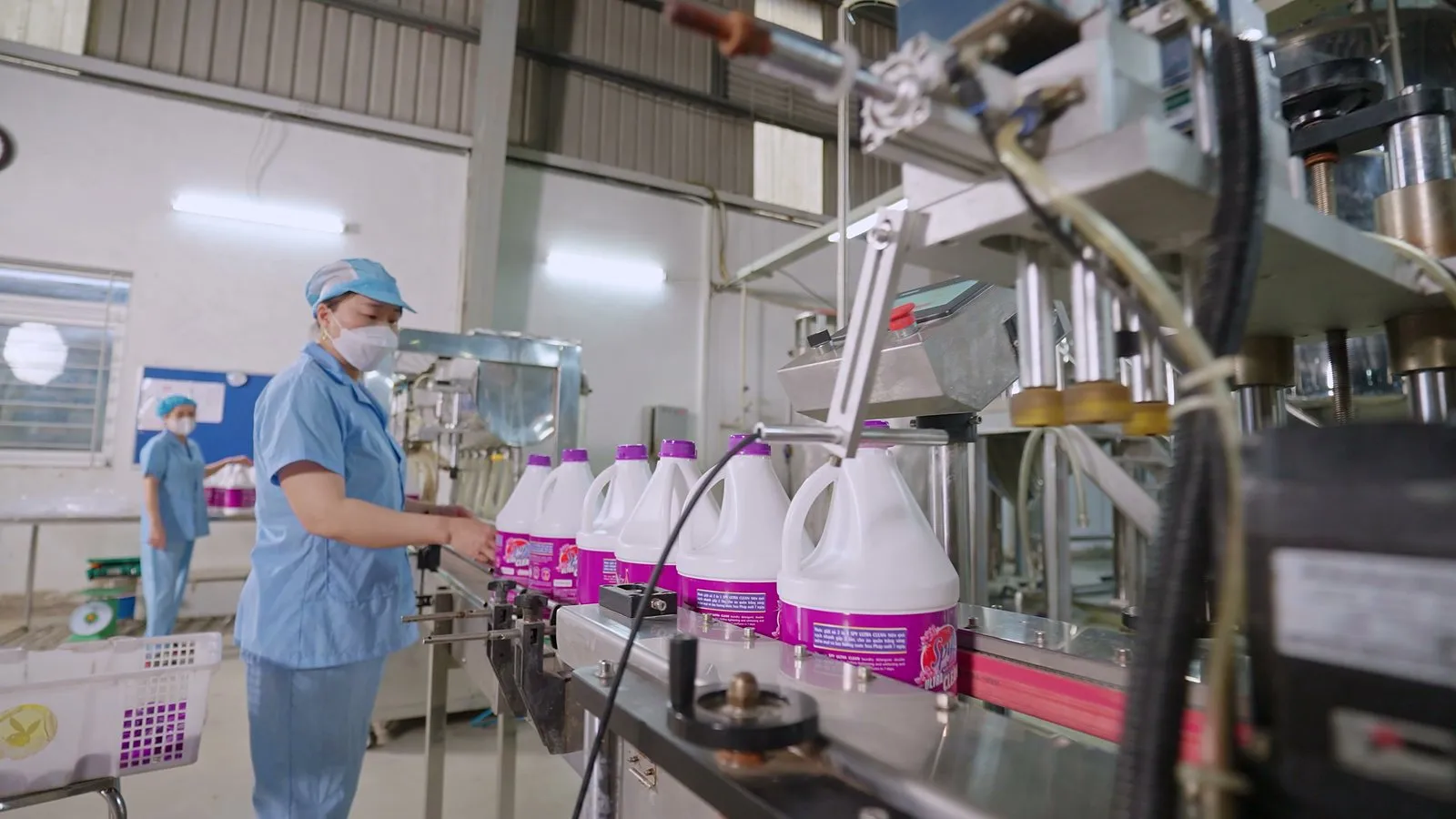
At Komlife’s factory in Hung Yen, confidentiality of formulas and brand information and the quality criteria are agreed in the contract from the start. Each production batch has its own record and a retained sample for comparison, following the same inspection process as the SPY, URA and Abby products sold in supermarkets (see quality control at each stage). Komlife delivers free of charge to Ho Chi Minh City and the southern provinces in about 3–4 days. Minimum quantities, sampling and production times depend on the product, and the sales team gives specifics during consultation.
Send your requirements on the OEM/ODM detergent manufacturing page; the sales team will call back within 24 working hours.
FAQ
Does a detergent contract manufacturing agreement need to be notarised?
The law does not require notarisation for this type of contract; a written contract signed and stamped by both parties is valid. The parties may still notarise it if they wish.
Who owns the formula of a contract-made detergent?
It depends on the agreement. A factory’s existing formula usually belongs to the factory; a formula developed for you can belong to you if the contract says so.
How long should the factory keep retained samples?
At least for the shelf life of the batch, so a sample is still available if there is a complaint. Put this period in the contract.
Who is responsible for defective contract-made products?
Defects from the formula, mixing or filling are the factory’s; defects from packaging or labels you supplied are usually yours. The contract should define how to tell them apart and the deadline to report.
Read more: How to choose a reliable detergent contract manufacturer · What a full-service detergent manufacturing package includes · Private-label detergent: a 5-step process
Reviewed by: Vu Hoang Nam, Head of Marketing
← More company news