
Quality control in detergent contract manufacturing: what should the factory check at each stage?

When you outsource production, you’re not on the factory floor every day, yet every bottle carries your name. So the real question isn’t only “is the formula good?” but “will batch 10, or batch 50, match the first one?” That is the job of the factory’s quality assurance and quality control (QA/QC) system.
Here are the five main control stages and the questions to ask at each.
Stage 1: Incoming raw materials and packaging
- Raw materials: every lot of chemicals and fragrance should arrive with the supplier’s certificate of analysis, and the factory should re-test key parameters before use.
- Packaging: check bottle dimensions, cap fit, print colour and label content. A cap that doesn’t fit the bottle is a common cause of leaks in transit.
Ask: “What happens to a raw material lot that fails?”
Stage 2: Process water
Water is the largest ingredient in liquid detergent. The factory should filter and treat incoming water and monitor its quality regularly, because changes in water can make a product cloudy or change its viscosity or scent.
Stage 3: Blending
- Each batch has a batch record: formula, weight of every ingredient, order of addition, mixing time.
- The bulk product is sampled and tested before filling.
Ask: “If a batch is off-spec, can it be adjusted, and who decides?”
Stage 4: Filling and packing
- Net content (volume or weight) is checked at fixed intervals during each shift.
- Caps are checked for tightness; labels for position and correct product.
- The production date and lot number are printed on every bottle for traceability.
Stage 5: Finished goods and release
- Finished goods are sampled for a final check before shipment.
- Retained samples from every batch are kept for a set period, for comparison if there is a complaint.
- Each lot has a lot file: which raw material lots, which blending date, which tests.
Parameters commonly tested
| Parameter | Why it matters to you |
|---|---|
| Appearance, colour | Every bottle on the shelf looks the same |
| Scent against reference | Returning customers recognise their scent |
| pH | The product is stable and on-formula |
| Viscosity | A consistent “rich” feel from batch to batch |
| Net content | Matches the label, avoids complaints |
| Pack integrity | No leaks in transit, especially for online orders |
Put quality into the contract
- A reference sample (colour, scent, viscosity) signed off by both sides and used to accept each lot.
- Acceptance criteria and the sampling rate when goods are received.
- How defects are handled: replacement, rework or price reduction.
- The right to see lot files when needed.
A factory that is confident in its process will be happy to write these into the contract.
Quality control at Komlife’s factory
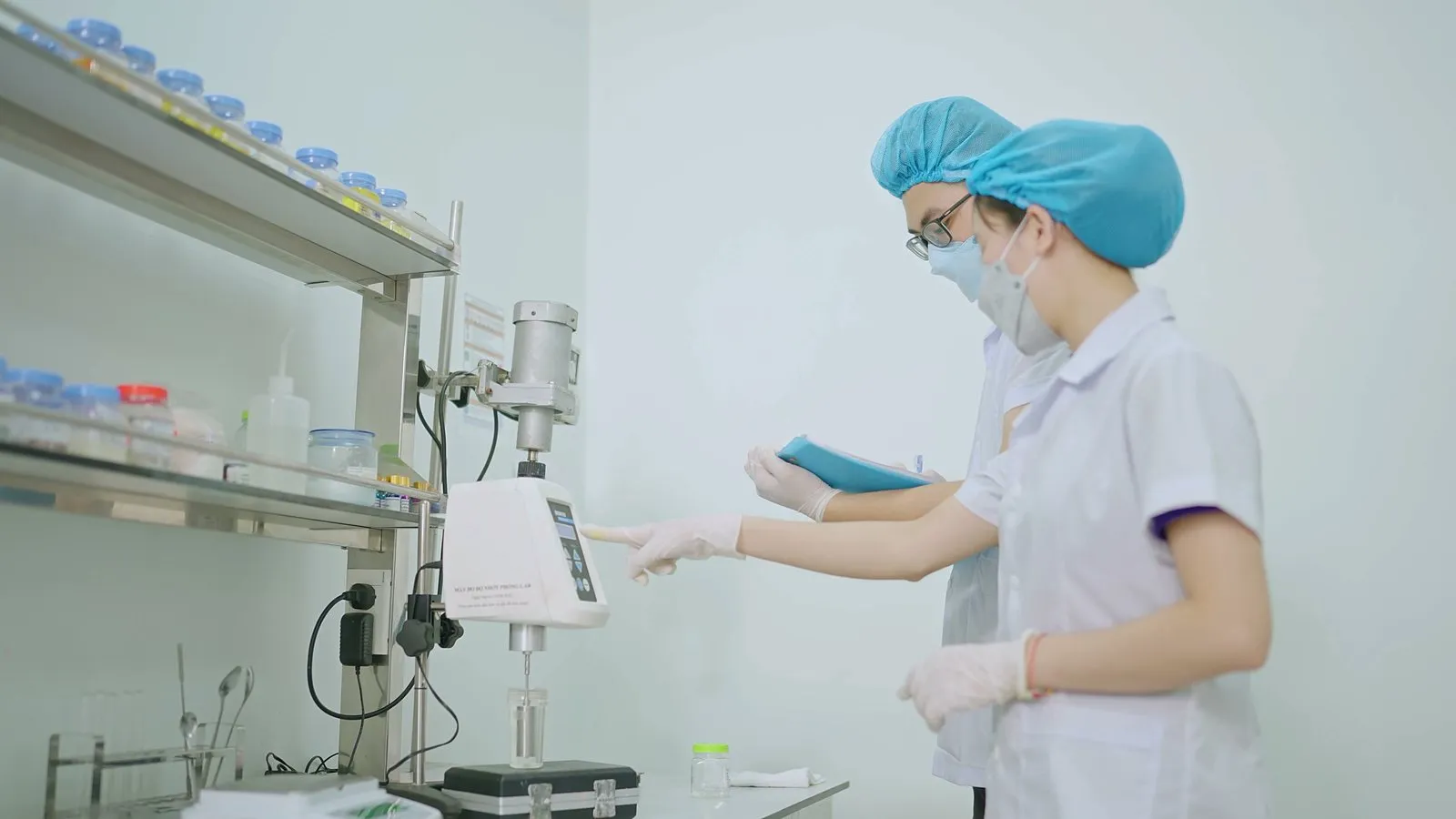
At Komlife’s factory in Hung Yen, northern Vietnam, private label orders go through the same checks as our own detergent and softener brands sold in supermarkets: incoming water is treated at the factory’s own filtration station, every batch has its own record and a retained sample, and products are tested in the factory laboratory before release. Learn more about quality and standards or send us your request.
Read more: Inside Komlife’s 20,000 m² factory in Hung Yen · What a detergent contract manufacturing agreement should include
Reviewed by: Vu Hoang Nam, Head of Marketing
← More company news