
Distributor vs dealer: what is the difference, and what are tier-1 and tier-2 dealers?
Quick answer: a distributor buys large volumes from the brand, runs a warehouse, vehicles and sales reps, and resells to dealers, grocery stores and mini-marts in its area. A dealer buys from the brand or from a distributor and sells to end customers or smaller shops. “Tier 1, tier 2” describes position in the chain: tier 1 buys closest to the brand, tier 2 buys from tier 1. Every brand names and sets these levels differently, so always ask who you buy from, who you sell to, and in which area.
How products travel from factory to shopper
For everyday products such as laundry liquid, dishwashing liquid and floor cleaner, a bottle usually passes through a few stages:
- The factory or brand makes and packs it.
- A distributor buys in bulk, holds stock in a provincial warehouse and delivers to local shops.
- Dealers, grocery stores and mini-marts buy from the distributor or directly from the brand.
- The end customer buys it for home use.
Not every product goes through every stage. Many brands sell directly to dealers in areas without a distributor, or to online sellers.
What is a distributor?
A distributor buys from the brand to resell within an area, usually a province or several districts. Its main jobs:
- Holding stock so shops are never short.
- Covering the market with reps who visit grocery stores and mini-marts to take orders.
- Delivering and collecting payment, tracking each shop’s credit.
- Display and promotions: bringing the brand’s shelves, price boards and campaigns to shops.
So becoming a distributor takes capital to hold stock, warehouse space, vehicles and staff. Profit comes from volume and the network of shops served.
What is a dealer?
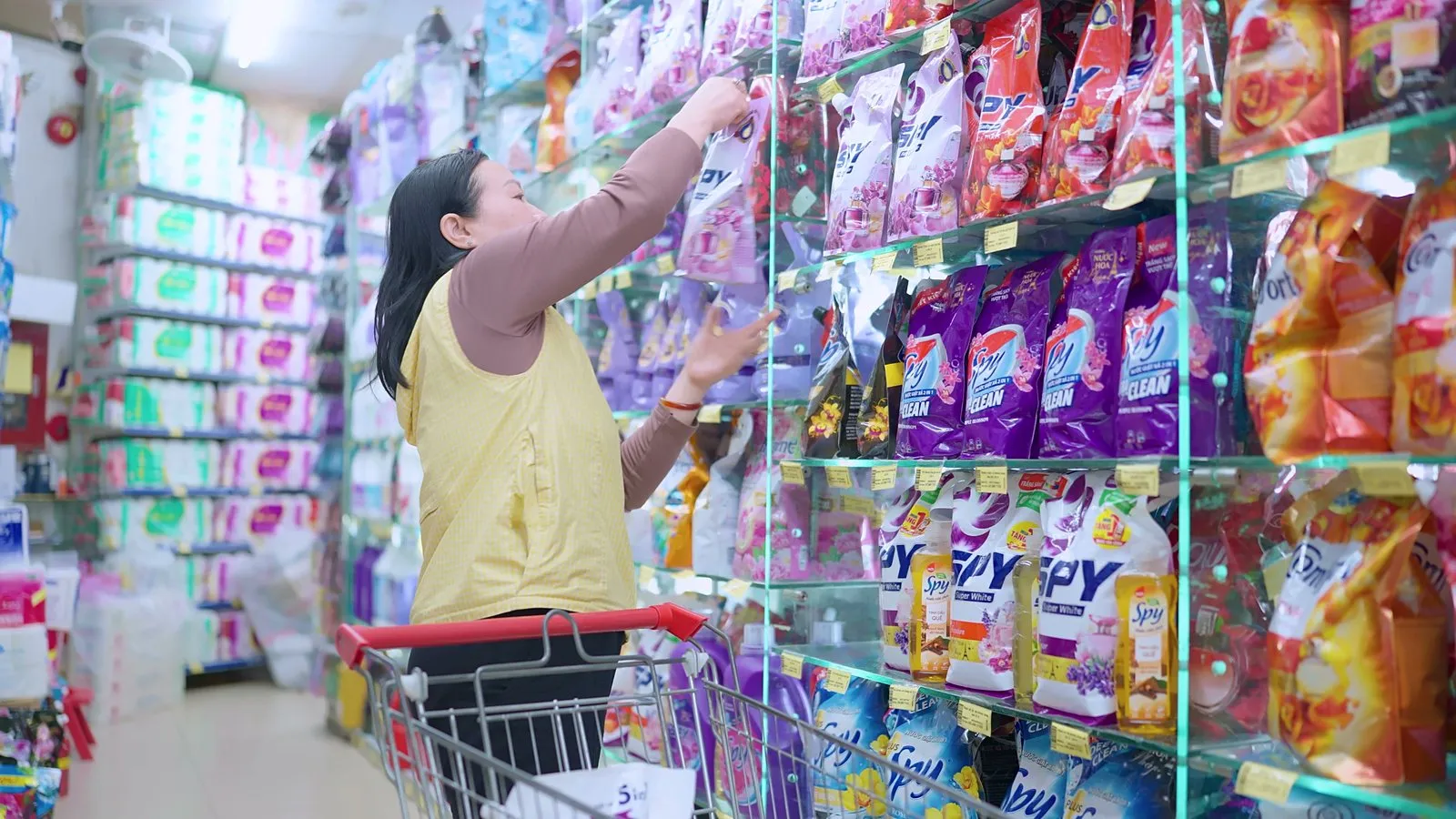
In everyday Vietnamese business, “đại lý” (dealer) usually means a shop that stocks a brand’s products: a grocery store, household products shop, mini-mart or online seller. Dealers sell mainly to end customers, sometimes also to a few small shops nearby.
Compared with a distributor, a dealer needs less capital and no fleet or field sales team, but sells smaller volumes.
A legal note: Vietnam’s 2005 Commercial Law has a separate section on “commercial agency” (Articles 166–177). Under that law, the principal remains the owner of the goods, while the agent sells on its behalf for a commission; the law also lists forms such as exclusive agency and general agency. In practice, many shops called “dealers” actually buy outright: once stocked, the goods belong to the shop, which sets its own retail price. Read the contract carefully to know which type you are signing.
What are tier-1, tier-2 and tier-3 dealers?
“Tier” means distance from the brand in the distribution chain:
- Tier 1 buys directly from the brand (or its general agent), usually at the lowest buying price in the chain, and may resell to tier 2.
- Tier 2 buys from tier 1 or a distributor and sells to smaller shops or end customers.
- Tier 3 is usually a retail shop buying from tier 2.
Each brand sets its own names and conditions for each tier, such as minimum sales, sales area and whether you may resell to other shops. There is no single definition for every industry, so ask the brand directly.
Quick comparison
| Distributor | Dealer, shop | |
|---|---|---|
| Buys from | Brand, factory | Brand or distributor |
| Sells to | Dealers, grocery stores, mini-marts in the area | Mainly end customers |
| Capital, storage | Large, needs its own warehouse | Smaller, often the shop itself |
| Staff, vehicles | Needs field reps and delivery vehicles | Not required |
| Main work | Stock, shop coverage, delivery, credit | Selling and advising customers |
Where should you start?
- Already running a shop or grocery store: start as a dealer, stock a few lines every household uses (laundry liquid, dishwashing liquid, floor cleaner), watch repeat purchases, then expand.
- Already have a warehouse, vehicles and contacts with many shops in your province: consider becoming a distributor, since a distributor’s biggest asset is its existing shop network.
- Selling online: usually stock as a dealer, and pick a brand with reliable delivery so you don’t run out when orders rise.
Questions to ask a brand before signing:
- Do I buy from the brand or from a local distributor?
- How are prices and discounts calculated (monthly sales, order size)?
- How long does delivery take, and who pays for shipping?
- How are faulty goods exchanged?
- Is there support with display materials and product photos?
Working with Komlife
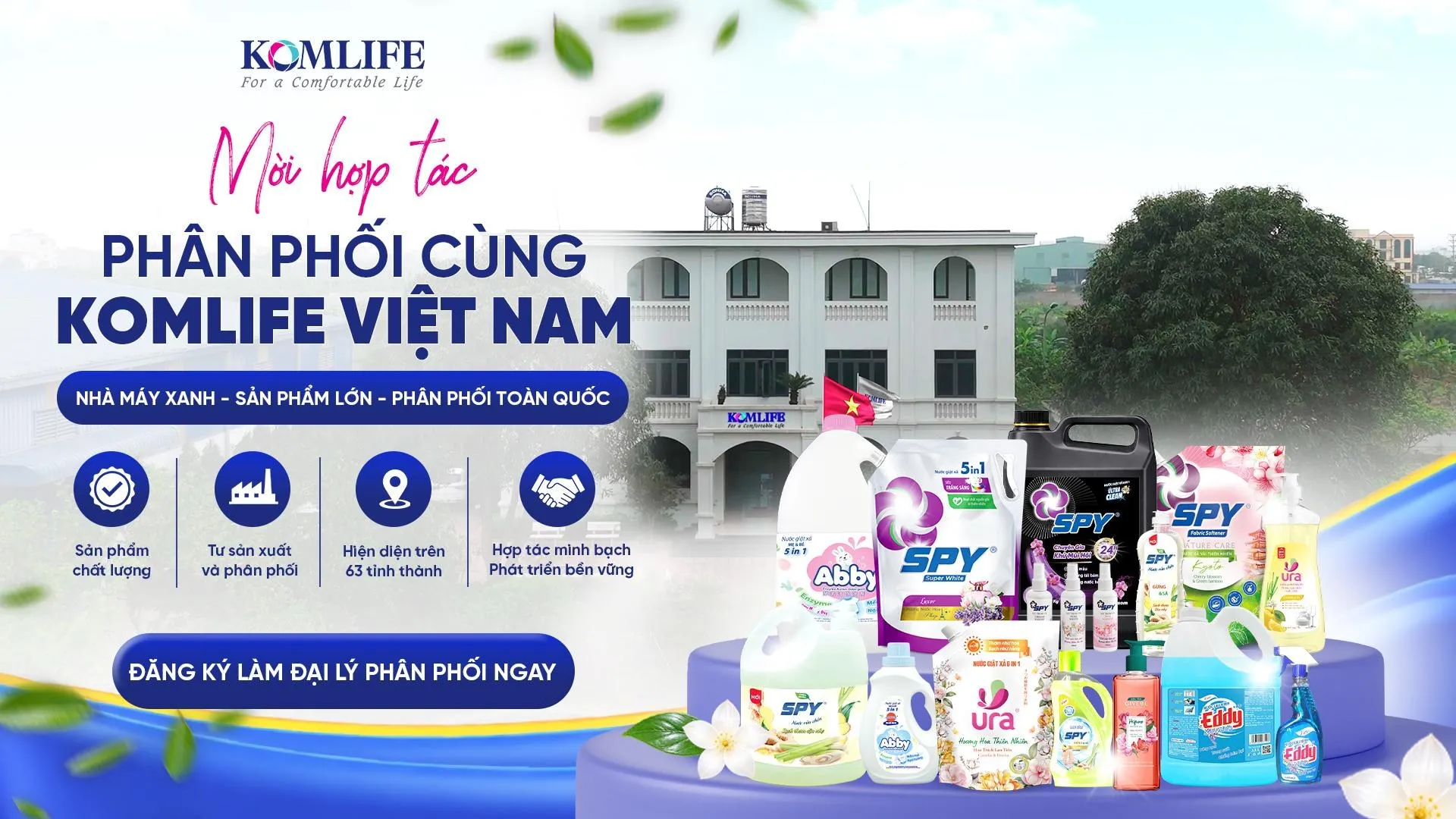
Komlife manufactures at its 20,000 m² factory in Hung Yen and works with provincial distributors, dealers, grocery stores, mini-marts and online sellers:
- One nationwide price list, with discounts that rise with monthly sales.
- Free delivery to central and southern Vietnam, usually arriving in 3–4 days.
- Support with shelves, standees, price boards, samples and product photos.
- The exact partnership model is discussed with our sales team based on your area and size.
See details and register on the distributor partnership page.
Read more: Where should a grocery store buy laundry and household products? · Opening a laundry detergent and household products shop: what to prepare · Buying laundry detergent wholesale direct from the factory · Selling laundry detergent: suppliers, channels and costs
Reviewed by: Vu Hoang Nam, Head of Marketing
← More company news