
Is dishwashing liquid harmful? How to wash so no residue is left on your dishes
Quick answer: dishwashing liquid is a cleaning agent, made to wash dishes and then be rinsed away with clean water. What matters is how it’s used: too much, poor rinsing that leaves residue on dishes, leaving it within children’s reach, or getting it in the eyes. Use just enough, rinse under running water until nothing feels slippery, choose a product with a complete label, and store it out of children’s reach.
When should you be careful?
| Situation | Why it matters | What to do |
|---|---|---|
| Not rinsed enough | Dishes stay slippery with cleaning residue | Rinse under running water until no slippery feel |
| Too much liquid | Lots of suds, hard to rinse off | Put just enough on the sponge |
| Long contact with hands | Frequent washing dries and cracks skin | Wear gloves for big loads, dry your hands |
| Children can reach it | They may swallow it or get it in their eyes | Store high, close the cap, never decant into other bottles |
| Wrong use | Many products aren’t labelled for fruit and vegetables | Only use it as the label directs |
How to wash without leaving residue
- Scrape off leftovers first.
- Put just enough on the sponge; don’t pour lots straight onto the dishes.
- Rinse under running water, not just a dip in a basin.
- Check by touch: clean dishes have no suds and no slippery feel.
- Plastic containers, lids and cups with grooves need more rinsing, as suds collect in corners.
- Dry on an airy rack until completely dry.
For big loads in basins, see the wash – rinse – final rinse set-up in Dishwashing liquid for restaurants and canteens.
Can you wash fruit and vegetables with it?
Only if the label clearly says it’s for fruit and vegetables. Most dishwashing liquids are labelled for dishes and cookware only. Ordinary produce just needs soaking and a thorough rinse under clean running water.
What to check on the label
- Manufacturer’s name and address.
- Main ingredients and directions for use.
- Expiry and production dates.
- Warnings (keep out of reach of children, avoid contact with eyes) and first-aid instructions.
See also Choosing dishwashing liquid: how to read the label.
If it gets in the eyes or a child swallows it
- Eyes: rinse immediately with plenty of clean water for several minutes. If they still sting or look red, see a doctor.
- Swallowed: rinse the mouth with clean water, don’t induce vomiting, take the bottle with you and go to a medical facility or call 115 for advice.
- Always follow the first-aid instructions on the label.
Komlife dishwashing liquids
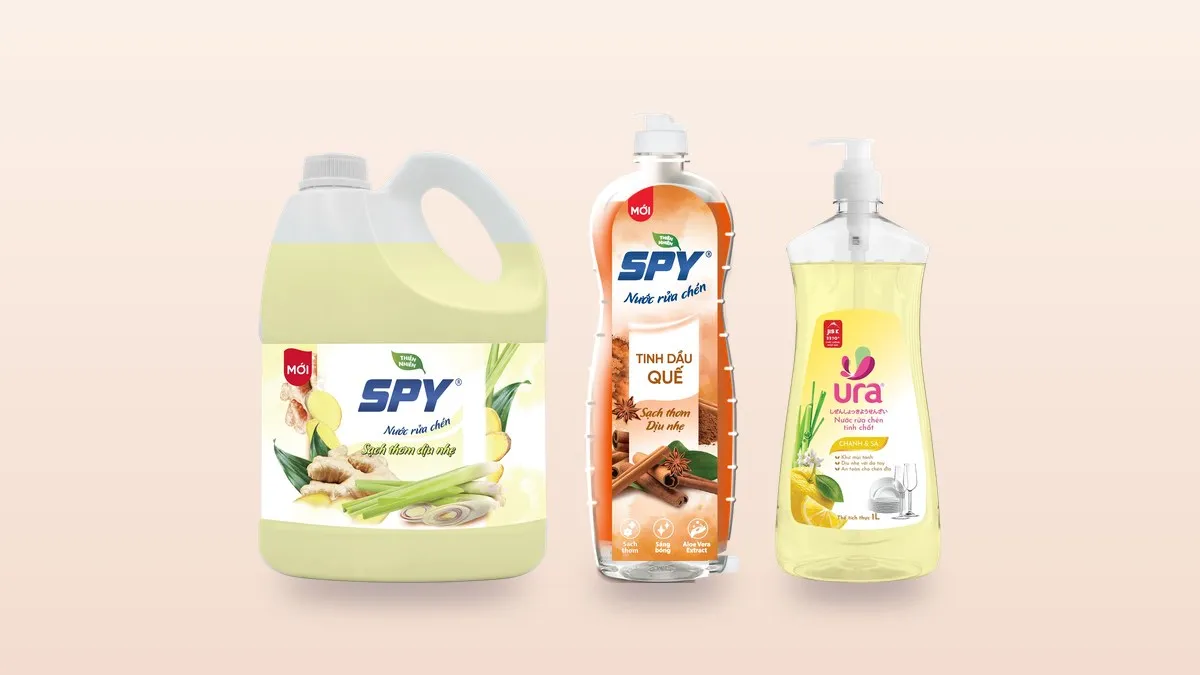
- SPY Dishwashing Liquid: removes grease, dried starch and fishy smells from dishes; for porcelain, glass, stainless steel, aluminium and plastic. Comes in an Unscented version for homes that don’t want scent on drinking glasses. Directions: put just enough on the sponge, lather, wash, then rinse with clean water.
- URA Dishwashing Liquid: Lemon & Lemongrass and Java Cinnamon; put just enough on the sponge or dilute in water, wash, then rinse with clean water.
Both labels say: keep out of reach of children.
Read more: Dishes still smell fishy after washing · Can you use dishwashing liquid in a dishwasher?
Reviewed by: Vu Hoang Nam, Head of Marketing
← More home care guides