
What goes into a laundry detergent formula? Why home-mixed batches are unstable, and when to use contract manufacturing
Quick answer: a laundry detergent formula is not just “cleaner mixed with water”. It combines several ingredient groups: surfactants that clean, anti-redeposition agents that keep dirt from settling back on fabric, chelating agents that deal with hard water, and optionally enzymes, softeners, fragrance and preservatives. The hard part isn’t the ingredient list but the ratios, mixing order, stability over months and batch testing. That’s why people launching their own brand usually order an existing formula (ODM) instead of buying a recipe to mix themselves.
Ingredient groups in laundry detergent
| Group | What it does | Names often seen on labels |
|---|---|---|
| Surfactants | Wet the fabric, lift grease and dirt out of the fibres | Sodium Lauryl Ether Sulfate, Sodium Linear Alkylbenzene Sulfonate |
| Non-ionic surfactants | Support cleaning with less foam, suit front-loaders | Dehydol LS9 |
| Anti-redeposition agents | Keep dirt suspended in the water so it doesn’t settle back | Sokalan |
| Chelating agents | Reduce the effect of hard water so surfactants work better | Trilon M |
| Enzymes | Break down protein and starch stains (milk, food, sweat) | Protease, amylase… |
| Softeners (2-in-1 products) | Soften fibres in the same wash | Noverite |
| Odour-control and whitening aids | Help control odour; help whites look brighter | Tinosan HP100, Tinopal |
| Fragrance, preservatives, colour | Scent; keep the product stable until expiry | Fragrance, preservatives… |
These names come from the ingredients printed on Komlife product labels. Each formula uses only some of them, depending on its purpose.
Why home-mixed detergent is hard to keep stable
- Ratios and mixing order: the same ingredients mixed in the wrong order or at the wrong temperature can clump, turn cloudy or miss the target thickness.
- Separation, colour or smell changes after a few weeks: formulas without stability testing often fail in hot warehouses or humid storage.
- Foam and thickness: too much foam doesn’t suit front-loaders; too thin and customers assume poor quality.
- Water source: mixing water must be filtered; well or tap water changes with the season, so every batch differs.
- Batch testing: pH, viscosity and appearance should be checked and samples kept for reference when customers give feedback.
- Chemical handling safety and paperwork (product standards, testing, labelling): see What paperwork does detergent production need?.
Buy a recipe or use contract manufacturing?
| Buy a recipe and mix it yourself | Order an existing formula (ODM) | |
|---|---|---|
| Upfront investment | Mixers, tanks, water filtration, chemical storage | No factory needed |
| Stability | Your own testing | Formula already proven at factory scale |
| Batch testing | Do it yourself or outsource | The factory tests and keeps samples |
| Time to market | Long, many trial batches | Faster: pick an existing formula and fine-tune |
| Production permits | Your responsibility (chemicals, environment, fire safety…) | Handled on the factory side |
For a fuller comparison, see Open your own detergent workshop or use contract manufacturing?.
Contract manufacturing at Komlife
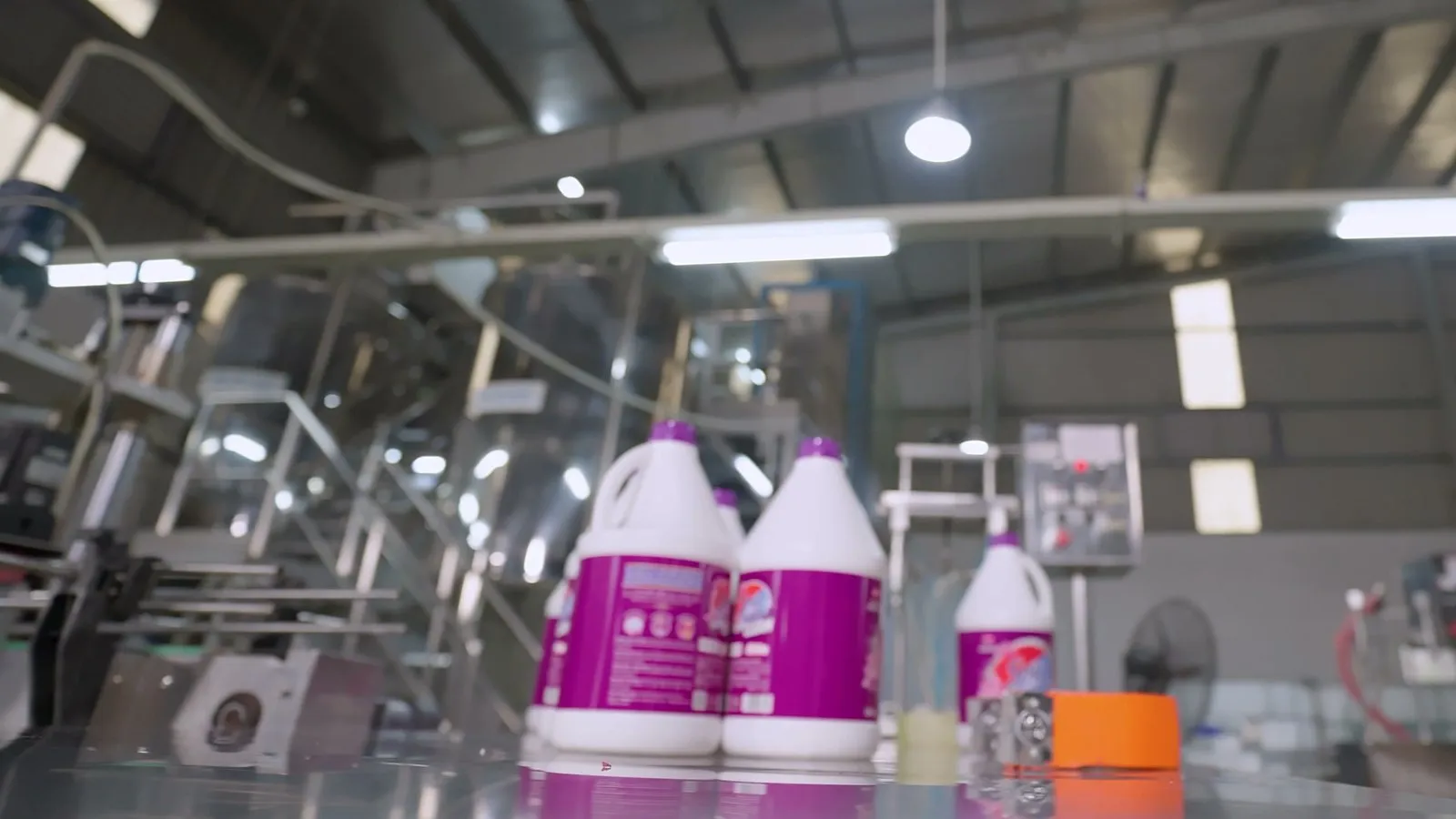
Komlife has an in-house R&D laboratory at its 20,000 m² factory in Hung Yen, which produces the SPY, URA, Abby, Givebe and Eddy brands. Contract customers can choose an existing formula and fine-tune scent, thickness and packaging, or develop their own formula. See the process and send your request on our OEM/ODM laundry detergent manufacturing page.
Read more: OEM vs ODM: what’s the difference? · What drives the price of contract detergent manufacturing? · Komlife’s R&D laboratory
Reviewed by: Vu Hoang Nam, Head of Marketing
← More company news