
OEM vs ODM: what's the difference, and which suits your private label?
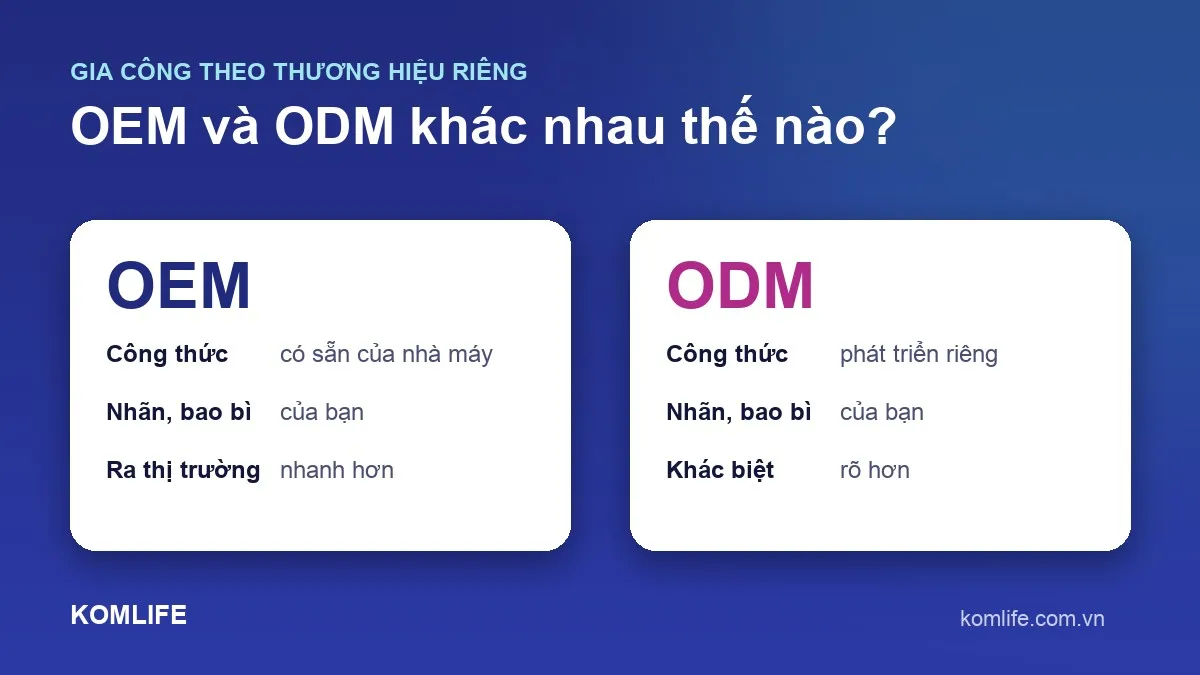
Quick answer: OEM means the factory makes your product from its existing formula and packs it under your label and packaging. ODM means the factory develops a custom formula to your requirements for performance, scent, colour or price point. OEM gets you to market faster, with less testing; ODM gives clearer differentiation but needs more sampling time.
Two terms in household and personal care manufacturing
For laundry detergent, fabric softener and dishwashing liquid, the two terms are generally used like this:
- OEM (Original Equipment Manufacturer): the factory uses its existing formulas and processes and produces and packs under your brand.
- ODM (Original Design Manufacturer): the factory researches and develops a formula to your specific requirements, then produces it under your brand.
Both are private label manufacturing: you don’t need your own plant, production lines or R&D lab.
At a glance
| OEM | ODM | |
|---|---|---|
| Formula | The factory’s existing formula, with a choice of available scents and colours | Developed to your requirements |
| Sampling | Few rounds, mostly choosing and approving | Several rounds of testing and adjustment |
| Time to market | Faster | Longer |
| Upfront investment | Lower | Higher (time, samples) |
| Differentiation | Mainly through packaging, scent and how you sell | In the product formula itself |
| Formula ownership | Belongs to the factory | Agreed clearly in the contract |
When to choose OEM
- You are new to private label and want to test the market with moderate capital.
- You already have sales channels (shops, distributors, online stores) and need stock soon.
- Mainstream products: everyday laundry detergent, softener, dishwashing liquid, floor cleaner.
How to stand out with OEM: choose scents that suit your customers, pack sizes that suit your channel, and a clear label design. See private label fabric softener: 5 choices on scent, thickness and packaging.
When to choose ODM
- You have a specific product idea: a particular function, scent or audience (hotels, laundries, corporate gifts…).
- You want to differ in the formula, not only the packaging.
- You have time for several sampling rounds and a long-term sales plan.
With ODM, agree from the start in the contract on who owns the formula, confidentiality, sample approval criteria and order quantities.
What both have in common
Whichever model you choose, you still need:
- A brand and trademark registration, and labels that meet labelling rules.
- Product documents before selling: see making laundry detergent in Vietnam: what paperwork?
- Batch-by-batch quality control: ask the factory about batch records and retained samples. See quality control in detergent contract manufacturing.
- A full budget: see what does it cost to launch a private label laundry detergent?
Komlife offers both OEM and ODM
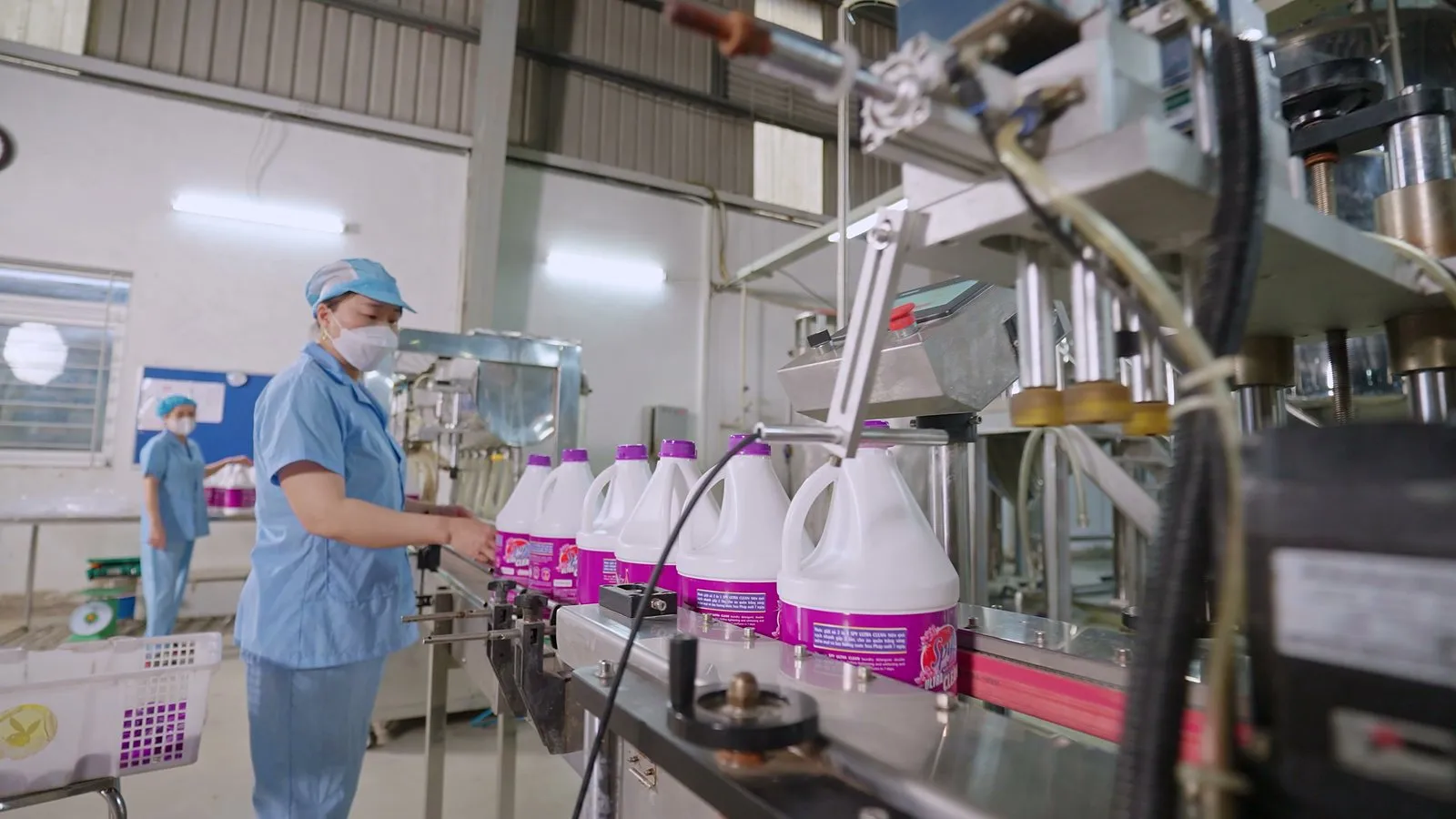
At our 20,000 m² factory in Hung Yen, northern Vietnam, Komlife offers OEM/ODM manufacturing of laundry detergent, fabric softener, dishwashing liquid, floor cleaner, body wash, shampoo and other home care products. For ODM, the factory’s research & development department develops formulas to order, with a commitment to keep them confidential. Not sure which model fits? Send us your request and our sales team will advise.
Read more: Private-label detergent manufacturing in 5 steps · Own detergent factory or contract manufacturer? · What’s in a laundry detergent formula?
Reviewed by: Vu Hoang Nam, Head of Marketing
← More company news